Periodontal Treatment Ventura: Expert Care for Better Gum Health
@milogacy655
Healthy gums rarely get much attention until something starts to feel off. A little bleeding in the sink. Breath that does not improve no matter how often you brush. Teeth that seem slightly longer than they used to. For many patients in Ventura, these early changes are easy to dismiss because they often arrive without dramatic pain. That is part of what makes gum disease so persistent. It advances quietly, then starts affecting comfort, appearance, and long-term oral health all at once.
Periodontal care exists to stop that progression. Done well, it is not just about cleaning below the gumline. It is about preserving bone, stabilizing teeth, reducing chronic inflammation, and making daily home care more effective. When patients begin periodontal treatment early, the difference can be striking. Gums become less swollen, bleeding settles down, and routine brushing stops feeling like a warning sign.
If you are researching Periodontal Treatment Ventura, it helps to understand what periodontal treatment really includes, who needs it, and what good care should look like from the first exam through maintenance.
What periodontal treatment actually treats
Periodontal disease affects the supporting structures around the teeth, primarily the gums, periodontal ligament, and bone. It often begins as gingivitis, where the gums are irritated and inflamed but the bone is still intact. At this stage, treatment is usually straightforward and highly effective. With professional cleaning and better plaque control at home, the gums can often return to health.
Once the disease progresses into periodontitis, the situation changes. Bacteria and hardened deposits move deeper below the gumline. The body responds with inflammation, and that inflammatory process can begin destroying the bone that holds the teeth in place. Periodontal treatment at this stage focuses on controlling infection, removing irritants, and slowing or stopping further damage. In some cases, it also aims to rebuild or reshape affected tissue.
One of the biggest misconceptions patients have is that gum disease always hurts. In practice, many people with moderate periodontal disease feel little or no pain. They may notice blood on the toothbrush, sensitivity near the roots, food trapping between teeth, or a subtle shift in how the bite fits together. By the time there is visible loosening, the disease is often well established.
Why gum disease is so common in adults
Ventura patients are not unusual in facing periodontal issues. Gum disease is common across age groups, especially in adults who have gone years between comprehensive periodontal evaluations. Plaque is the starting point, but it is rarely the only factor. Smoking, diabetes, dry mouth, grinding, genetics, hormonal changes, and certain medications can all increase risk.
I have seen patients who brush faithfully twice a day and still develop localized deep pockets because they have crowded lower front teeth or old dental work that traps bacteria. I have also seen people with very little tooth decay but significant gum recession caused by aggressive brushing and years of clenching. Periodontal care has to be individualized because the causes are usually layered.
That matters in treatment planning. Two patients can both be told they have periodontal disease, yet one may need deep cleaning and quarterly maintenance, while the other may need surgical therapy around a few teeth where bone loss is advanced. The diagnosis is only the beginning. The detail behind it determines what expert care should look like.
The warning signs worth taking seriously
Most people do not wake up one morning with severe periodontal disease. There are usually warning signs, even if they seem minor at first.
- Bleeding during brushing or flossing that happens more than occasionally
- Persistent bad breath or a sour taste that keeps returning
- Red, puffy, or tender gums, especially near the margins
- Receding gums or teeth that appear longer than before
- Teeth that feel loose, shifted, or harder to clean between
Bleeding gums are especially important. Many patients assume they are brushing too hard when they see blood. Sometimes that is true, but far more often the issue is inflammation from bacterial buildup. Healthy gums generally do not bleed with normal brushing and flossing.
What to expect at a periodontal evaluation
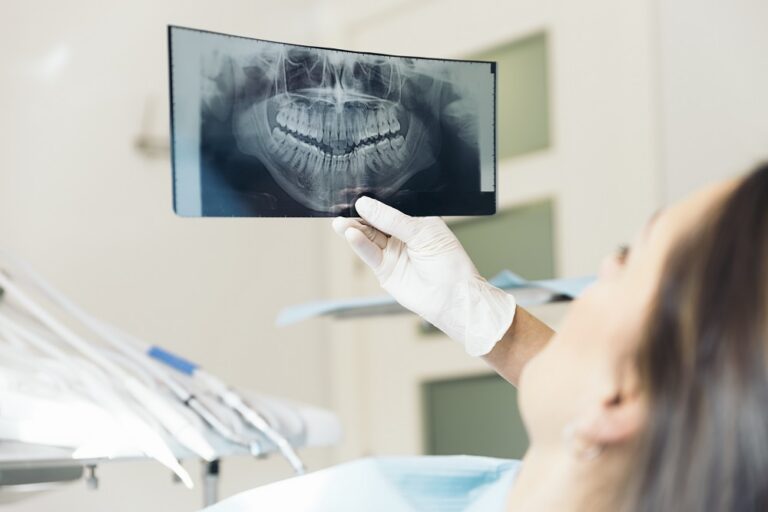
A proper periodontal exam goes well beyond a quick glance. The clinician should measure the depth of the spaces between your teeth and gums, assess bleeding points, check for recession, evaluate tooth mobility, review bone levels on radiographs, and note patterns that suggest trauma or uneven plaque accumulation.
Pocket depth measurements are one of the most useful tools here. In general, shallower pockets are easier to keep clean at home. Once pockets deepen, especially when bleeding and bone loss are present, routine brushing and flossing are no longer enough to disrupt the bacteria living below the gumline. That is where periodontal treatment becomes necessary.
Radiographs also matter because gum disease is not just a surface problem. Bone loss can be horizontal, where support decreases more evenly, or vertical, where deeper defects form near specific teeth. Those patterns influence whether a patient is best served by nonsurgical therapy alone or whether surgical access or regenerative procedures may be appropriate.
An experienced provider will also look for the reasons certain areas became diseased in the first place. A deep pocket around a single molar may reflect a furcation involvement, where bone loss reaches the area between roots. Recession on the outside of the canines may point to brushing trauma or bite stress. Treating the disease without addressing those contributors can limit the result.
The role of scaling and root planing
For many patients, the first phase of periodontal treatment is scaling and root planing, often called deep cleaning. This is not the same as a routine prophylaxis. A standard cleaning removes plaque and tartar above the gumline and in shallow, healthy crevices. Scaling and root planing targets bacterial deposits and calculus below the gumline, where inflammation is actively damaging tissue.
During this process, the clinician cleans the root surfaces carefully and thoroughly, often using both ultrasonic instruments and hand scalers. Local anesthetic is commonly used, especially when pockets are deeper or the gums are tender. The goal is to create a cleaner root surface that allows the tissue to heal and reattach as much as possible.
Patients sometimes expect the gums to “grow back” immediately after deep cleaning. The more realistic expectation is reduced inflammation, shallower pockets in many areas, and tissue that becomes firmer and easier to maintain. In early to moderate disease, this can be enough to stabilize the mouth very successfully. In more advanced cases, it may be the essential first step before additional treatment.
One practical point that often surprises patients is that the mouth can feel different after successful therapy. When swelling goes down, spaces between teeth may feel more open. This does not mean the treatment caused damage. In many cases, it means the inflated, infected tissue has shrunk back to a healthier contour. That change can make flossing easier and improve breath significantly.
When antibiotics or antimicrobial therapy help
There are cases where mechanical cleaning alone is not the entire answer. Localized antimicrobial agents, prescription rinses, or systemic antibiotics may be considered in specific situations, especially when there is persistent infection, aggressive disease patterns, or medical history that complicates healing.
This is an area where judgment matters. Antibiotics are not a substitute for removing calculus and biofilm. If bacteria remain protected by hardened deposits deep on root surfaces, medication alone will not solve the problem. Used selectively, though, adjunctive antimicrobial therapy can support better outcomes, particularly in sites that continue to show bleeding and depth after initial treatment.
The best periodontal care is usually conservative in the right places and decisive where needed. Overprescribing medication does not improve that standard. Neither does under-treating active disease because a patient is hoping for a simpler fix.
Surgical periodontal treatment, when it becomes necessary
Not every patient needs gum surgery, but some absolutely benefit from it. If deep pockets persist after scaling and root planing, or if bone loss creates anatomy that cannot be properly cleaned from the outside, surgical treatment may offer a more predictable result.
Periodontal surgery can take several forms. Flap procedures allow direct access to roots and bone for more thorough debridement. Osseous recontouring may be used to reshape uneven bone architecture that contributes to persistent pocketing. In carefully selected cases, regenerative procedures attempt to rebuild lost support using graft materials or biologic mediators. Soft tissue grafting may be recommended when recession exposes roots, causes sensitivity, or threatens long-term stability.
Patients often hear the word “surgery” and imagine a long, painful recovery. Most periodontal procedures are more manageable than expected, particularly when the plan is precise and post-operative instructions are followed. There is soreness, of course, and some swelling is common, but many people return to desk work quickly. The more important issue is whether surgery is likely to produce a better long-term outcome than continued maintenance alone.
For example, a patient with a persistently deep pocket behind a molar may keep getting temporary improvement from repeated cleanings, only to have inflammation return because the root anatomy is inaccessible. In that case, surgical access can make the difference between ongoing deterioration and true control of the area.
How maintenance protects your results
One of the most important truths about periodontal treatment is that it is rarely a one-time event. Gum disease is a chronic bacterial and inflammatory condition. Once someone has had periodontitis, they remain at higher risk for recurrence than a person who has never had it. That is why periodontal maintenance matters so much.
Maintenance visits are different from standard cleanings. They are performed at intervals based on risk, often every three or four months rather than every six. The gums are reassessed, pocket depths are reviewed, bleeding is checked, deposits are removed from above and below the gumline, and home care is adjusted if needed.
Patients sometimes wonder why they cannot simply return to six-month cleanings once their gums improve. In some mild cases, that may become appropriate later. But for many people, waiting six months allows bacterial communities enough time to mature and trigger inflammation again. Shorter maintenance intervals help interrupt that cycle before measurable damage returns.
This is where I often see the clearest difference between stable and unstable cases. The patients who do well long term are not necessarily those with perfect habits. They are the ones who understand that maintenance is part of treatment, not an optional add-on after treatment is over.
Daily habits that make treatment work better
No periodontal procedure can outperform neglect at home. Professional care resets the environment, but daily plaque disruption is what preserves that progress. Fortunately, home care does not need to be elaborate to be effective. It needs to be consistent, well targeted, and realistic enough to maintain.
- Use a soft toothbrush or electric brush with gentle pressure, especially along the gumline
- Clean between the teeth daily with floss, interdental brushes, or other tools recommended for your spacing
- Follow any prescription rinse or product directions exactly, especially after deep cleaning or surgery
- Avoid tobacco, which slows healing and worsens periodontal breakdown
- Keep maintenance appointments even when your mouth feels fine
The right tool depends on the mouth. Tight contacts may suit floss. Wider spaces often respond better to interdental brushes. Around bridges or implants, other aids may work better. Good periodontal providers usually demonstrate technique because many patients have been “flossing daily” for years without ever reaching the area that is actually inflamed.
Technique matters with brushing too. Scrubbing harder does not create healthier gums. It often produces recession and root sensitivity, especially in patients who are already dealing with tissue loss. A gentle, systematic approach tends to outperform force.
The connection between gum health and overall health
There is understandable interest in the relationship between periodontal disease and systemic health. That relationship is real, but it should be described carefully. Gum disease does not mean a person will develop a medical condition, and treating the gums is not a cure for unrelated illnesses. What we can say with confidence is that periodontal inflammation adds to the body’s inflammatory burden, and certain health conditions can make gum disease harder to control.
Diabetes is one of the clearest examples. Poor glycemic control can worsen periodontal inflammation and impair healing, while active periodontal infection can make blood sugar management more difficult. Smoking is another major factor. It reduces blood flow, masks bleeding that would otherwise reveal disease, and significantly worsens periodontal outcomes over time.
Pregnancy, autoimmune conditions, certain heart medications, and drugs that reduce saliva can also influence gum health. A thorough provider takes these details seriously because periodontal treatment is more successful when it is planned in the context of the whole patient.
Choosing expert periodontal treatment in Ventura
When people search for Periodontal Treatment Ventura, they are often comparing offices that all appear similar online. In reality, the quality of periodontal care depends heavily on diagnosis, communication, and follow-through.
A strong provider should explain the severity and location of the disease clearly. You should understand whether the problem is generalized or localized, mild or advanced, stable or actively progressing. You should know what treatment is being recommended, what alternatives exist, and what the realistic outcomes are. If surgery is suggested, the reasoning should be specific, not vague.
It is also worth paying attention to how the office handles maintenance and patient education. Periodontal treatment succeeds best when the clinical team is comfortable discussing pocketing, bleeding, mobility, recession, home care tools, and risk factors in practical language. Fancy terminology is less useful than a clear answer to a simple question: what is happening in my mouth, and how do we stop it from getting worse?
Ventura patients often balance a few concerns at once. They want infection controlled, but they also care about comfort, appearance, convenience, and cost. An experienced clinician does not dismiss those concerns. Instead, they help prioritize care. Sometimes the right path is treating the most active areas first. Sometimes it means a phased plan that begins with deep cleaning and reassessment before committing to surgery. Sometimes it means recognizing that a tooth with severe bone loss has a guarded prognosis, and that preserving the rest of the mouth should come first.
That kind of judgment is what separates routine care from truly expert care.
What recovery and results usually look like
The timeline varies depending on the procedure, the severity of the disease, and the patient’s general health. After scaling and root planing, some tenderness, sensitivity, and minor bleeding are common for a few days. Gums often begin looking less red and swollen fairly quickly. A re-evaluation is typically performed after healing to see how the tissue responded and whether any sites still need further attention.
After periodontal surgery, the course is more involved, but still very manageable for most people. Soft foods may be needed for several days. Brushing around the treated area may be modified temporarily. Follow-up visits are important because the early healing phase determines how well the area matures.
Long-term results depend on three factors more than anything else: the thoroughness of the initial treatment, the patient’s home care, and adherence to maintenance visits. When those line up, even patients with meaningful bone loss can often keep their teeth comfortable and functional for many years.
I have seen patients arrive embarrassed because they had delayed care for too long, convinced they were heading toward dentures. Some did need extractions for https://damienzgqg574.theburnward.com/from-diagnosis-to-recovery-periodontal-treatment-ventura-explained a few hopeless teeth, but many stabilized far better than they expected once the infection was addressed and maintenance became routine. Gum disease can be serious, but it is often far more manageable than patients fear when treatment starts before collapse is advanced.
A better future for your gums starts with clarity
Gum health affects far more than the look of your smile. It influences comfort, confidence, chewing, breath, and the long-term security of your teeth. The challenge is that periodontal disease rarely demands attention early in a dramatic way. It asks quietly, through bleeding, swelling, shifting, and subtle changes that are easy to postpone.
That is why timely, well-planned care matters. The goal of Periodontal Treatment Ventura is not simply to clean the teeth more deeply. It is to control disease, preserve support, and give patients a stable foundation they can maintain. For some, that means a carefully performed deep cleaning and better home care. For others, it means surgery, grafting, or more frequent maintenance. The right treatment is the one based on a clear diagnosis and a realistic plan.
If your gums bleed, feel tender, or seem to be pulling away from your teeth, it is worth getting a proper periodontal evaluation rather than waiting for pain. Early action almost always gives you more options, simpler treatment, and better odds of keeping your smile healthy for the long haul.
Avra Dental
Address: 1708 S Victoria Ave B, Ventura, CA 93003
Phone number: (805) 941-1001
FAQ About Periodontal Treatment Ventura
Can a dentist get rid of periodontal disease?
A dentist or gum specialist (periodontist) cannot fully cure or reverse advanced periodontal disease (periodontitis), but they can successfully stop its progression and manage the infection.
Is periodontitis very serious?
Yes, periodontitis is a very serious, advanced form of gum disease that destroys the bone and tissues supporting your teeth.
How is stage 2 periodontal disease treated?
Stage 2 periodontal disease (early to moderate periodontitis) is primarily treated with non-surgical deep cleaning procedures like scaling and root planing to remove bacteria and tartar below the gumline.